Basement Floor Epoxy in Spokane Valley, WA
A basement slab is the only floor in the house with dirt permanently pressed against its underside. That single fact drives everything about coating one — which product goes down, whether it needs a barrier primer first, and whether the project should even happen this year. We test before we quote, we will tell you when the answer is no, and we are straight with you about the one thing a coating cannot do for a Spokane basement.
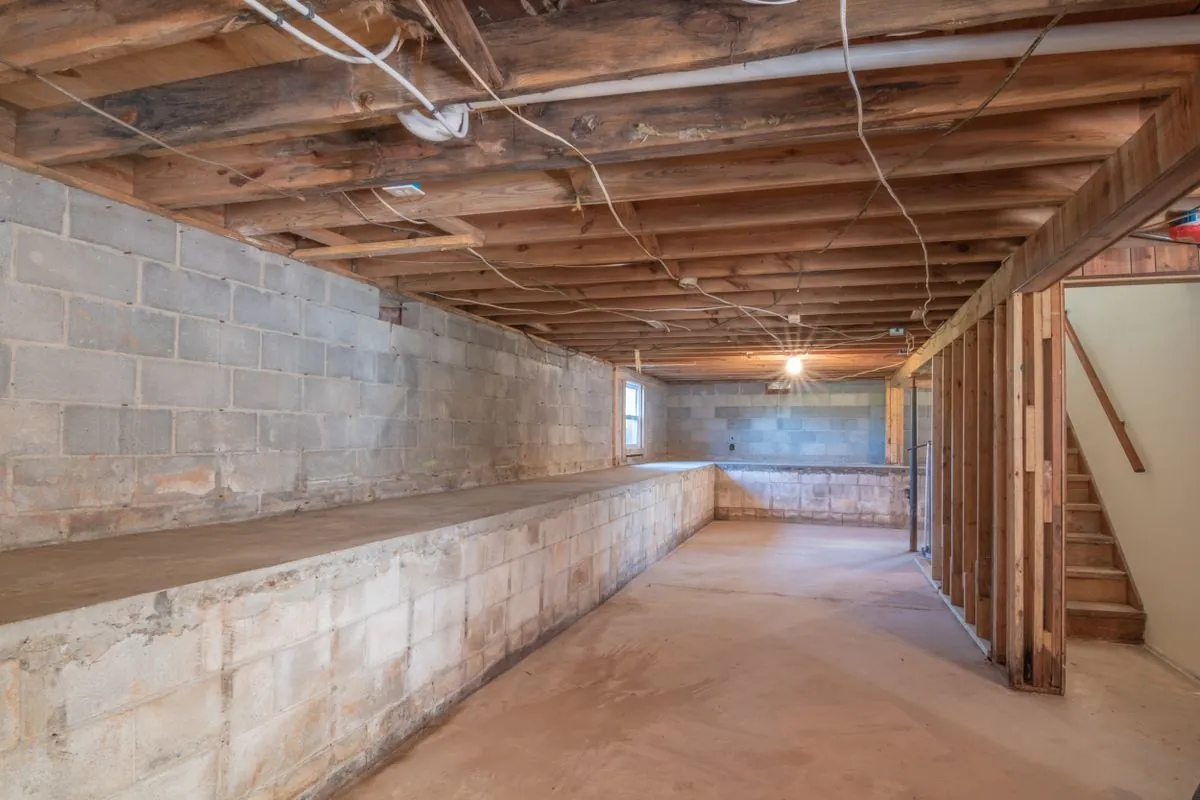
Test the Slab Before You Plan the Room
Ground moisture does not need standing water to ruin a coating. Vapor migrates continuously up through below-grade concrete, and if it moves faster than the film can release it, pressure builds underneath and lifts the floor. It shows up as blisters in the open field of the room, not as peeling at the edges, and it is the number one reason basement coatings fail.
We measure it rather than eyeball it. A calcium chloride kit or an in-slab relative humidity probe sits for 48 to 72 hours and returns an actual number. If it reads high, an epoxy vapor-barrier primer goes down first at $1.00 to $1.75 per square foot, and the system on top of it changes.
Spokane Valley sits on the gravelly outwash of the Rathdrum Prairie aquifer, which drains fast — good news most of the time. Where it stops being good news is spring melt and irrigation season, when the water table climbs and slabs that read dry in September come back wet in May. If we are testing in late summer we will say so and factor it in.
The Radon Conversation, Honestly
Some coating companies imply a sealed floor helps with radon. It does not, and in a county like this one that is worth stating plainly.
Spokane County is an EPA Zone 1 radon area. Public data puts the county average around 6.6 pCi/L against an action level of 4.0, with roughly 41 percent of tested homes above that line. Those are not numbers to hand-wave.
Radon comes in through control joints, the gap where the slab meets the foundation wall, sump pits, and utility penetrations. A coating skins the surface; it does not seal those paths, and it is not a substitute for a sub-slab depressurization system. What a coating does do is make the space pleasant enough that you will actually use it — which is exactly why you should test first. Finishing a basement you now spend time in, without knowing the number, is the wrong order of operations. We are not a radon company and we do not sell mitigation. We just would rather you test.
Choosing a Finish for a Room People Live In
A basement is not a garage, and the finish that suits one is often wrong in the other.
Full flake is the most forgiving. The chip pattern hides dust between cleanings and the texture gives grip if the space includes a laundry or a bathroom door. It is also the easiest to repair.
Solid color with a satin clear reads more like a finished room and less like a shop. Popular under home gym equipment, where a flat surface matters for rack stability.
Metallic turns a lower level into the best-looking room in the house, at roughly double the cost, and it cannot be spot-repaired.
Two practical notes. Satin hides trowel history better than high gloss in a room with side lighting from egress windows. And if a gym is going in, tell us where the platform lands so we can add extra build in that footprint rather than everywhere.
What a Basement Floor Costs Here
Most Spokane Valley basements land between $4 and $7 per square foot for a standard flake or solid color build, so a 900 square foot lower level runs roughly $3,600 to $6,300.
Vapor mitigation adds $1.00 to $1.75 per square foot when the test calls for it, and below grade it is called for more often than not.
Removing what is there now — old tile, carpet mastic, sealer, paint — adds $1.50 to $3.50 per square foot. Glue-down carpet adhesive in a 1970s basement is the most common version of this and the most underestimated.
Layout. Basements are chopped up. Furnace platforms, support posts, stair stringers and door thresholds all get hand-cut, and that labor is per-linear-foot of edge rather than per square foot of floor.
Metallic or multi-color moves the whole job to $7 to $12 per square foot.
When We Tell People Not to Coat Yet
Three situations, and we would rather lose the sale than take one on.
Active water intrusion. If there is a seepage line at the cove joint or the slab is damp after every rain, the drainage problem gets solved before anything gets coated. A coating over an unsolved leak traps the water and makes the diagnosis harder later.
A slab that is still curing. New concrete needs roughly 28 days minimum, and often longer below grade, before it will hold a coating.
A finishing project in the wrong order. Coat the floor after framing and drywall dust are done, not before. We have ground more than one beautiful floor that got ruined by a drywall crew two weeks later.
Frequently Asked Questions
Does an epoxy floor reduce radon in a Spokane basement?
No, and you should be skeptical of anyone who says otherwise. Radon enters through joints, sump pits and the slab-wall gap, and a coating is not a radon barrier. Spokane County is an EPA Zone 1 area where roughly 41 percent of tested homes read above the action level, so test before you finish the space and mitigate separately if needed.
How do I know if my basement slab will hold a coating?
A calcium chloride or in-slab humidity test answers it in a couple of days. Below-grade concrete is in permanent contact with ground moisture, and if vapor is moving up faster than the coating can breathe, the floor blisters. The test is cheap; guessing costs you the whole floor.
Can I install flooring over the epoxy later?
Yes for floating LVP or engineered plank, which just sits on top. Glue-down products are a different story, because the adhesive has to bond to the coating rather than the concrete and not all of them will. Tell us if that is a possibility and we will finish with a texture that gives adhesive something to grab.
Is an epoxy basement floor cold underfoot?
It is exactly as cold as the slab beneath it, so yes in an unheated lower level. Coating does not insulate. If comfort matters in a Spokane Valley basement, budget for area rugs in the sitting zones or an insulated subfloor system before the coating goes down.
Doing the whole lower level? Look at decorative and metallic epoxy in Spokane Valley, or garage floor epoxy if the garage is next on the list.