Polished Concrete Floors in Spokane Valley, WA
Polished concrete in Spokane Valley is a ten-year decision, not a finish decision. Buildings along Sprague and Trent get quoted a coating, buy it, and are back shopping for another one before the lease term is up. Polishing changes that math: instead of adding a layer that eventually lets go, machines refine the top of the slab itself until it hardens and reflects. Nothing is stuck to anything, so nothing can come unstuck. This page walks the buying decision in the order it actually happens — can my slab do this, what will it look like, what will it cost, and how badly does it disrupt the business.
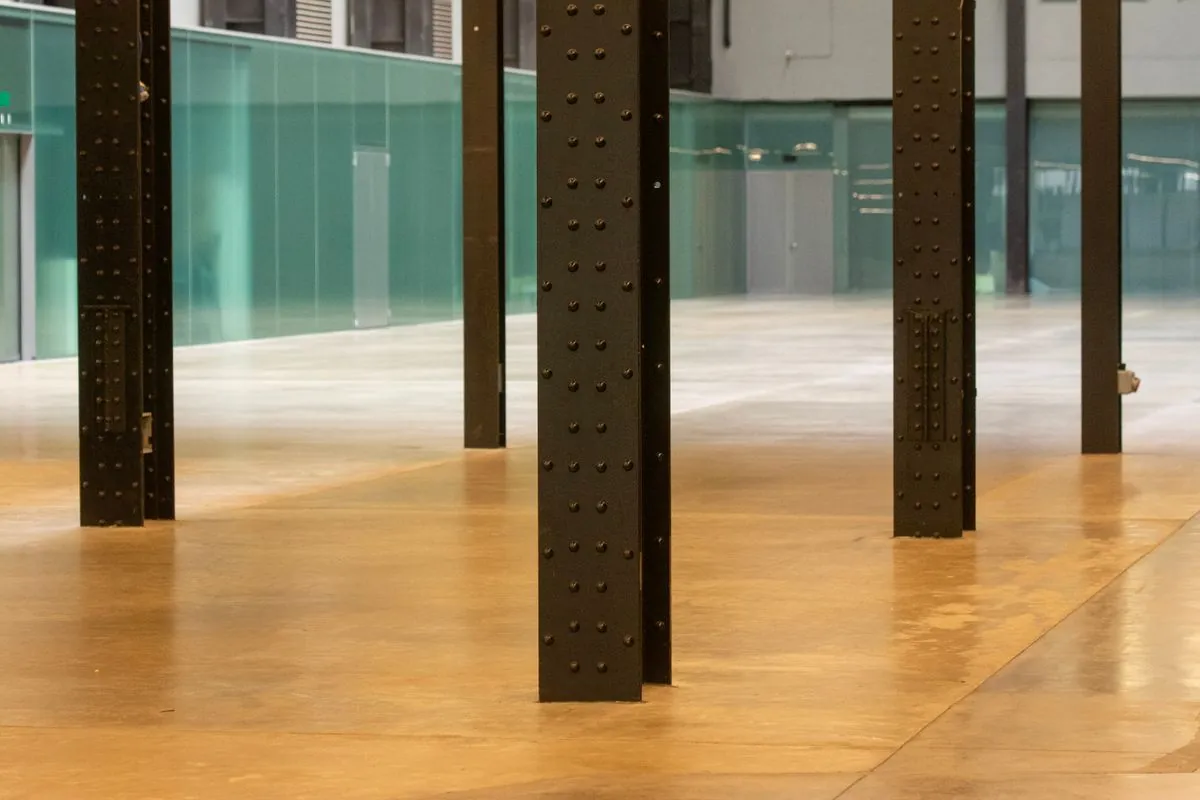
Is Your Slab a Candidate?
We answer this before quoting, because the slab decides more than the budget does. Four things get checked on site.
Surface hardness. A scratch test tells us how the top layer will respond to tooling. Concrete finished too aggressively years ago can be glassy on top and soft a millimeter down, and abrasives punch through it in blotches. That floor can still be done, but it has to be cut deeper than you were planning, which changes the look and the price.
Flatness. Machines follow the peaks. On a slab with real waves, the peaks reveal stone while the valleys stay pale, and the finished pattern traces every flaw the original pour left behind. Common in older Spokane Valley industrial buildings poured before laser screeds were standard.
What is stuck to it. Carpet mastic, mill scale, paint stripes, an old coating. All of it comes off first and all of it costs money.
Vapor. Less critical than with a coating, but a slab pushing serious moisture will bloom white salts through a polished surface. We test rather than guess.
The Four Finish Levels and What Each One Buys
Most confusion in quotes comes from two contractors pricing different products under one name. There are four recognized levels and they are not interchangeable.
Level 1, ground matte. Almost no reflection. Reads like clean raw concrete. Cheapest, fastest, and the right answer for a back-of-house warehouse where nobody cares how it looks.
Level 2, satin. Slight sheen, visible under lights but not mirror-like. The workhorse for shops and storage.
Level 3, semi-polished. Clear reflection at an angle. This is where retail and restaurant floors usually land.
Level 4, high gloss. Sharp reflections, images visible in the surface. Showroom material. It costs the most because it takes the most machine passes and it shows every defect you did not fix.
Separately, you choose exposure: keep the paste on top, open it slightly to reveal sand, or cut deep for full stone. Exposure and gloss are two different dials. Ask any contractor to state both numbers on the quote, and compare bids that way instead of by the word “polished.”
What Polishing Will Not Fix
Worth saying plainly, because the sales pitch usually skips it.
It will not hide cracks. A polished surface has no film to bridge anything, so every crack and every past repair stays visible. We fill working joints with a semi-rigid filler so forklift wheels stop chipping the edges, but the line remains a line.
It will not fix a floor that has settled. If a slab has dropped at a joint, grinding the high side just makes the step sharper. That is a mudjacking conversation first.
It will not deliver a color. Dyes shift the tone, but you are always looking at concrete, and the aggregate that surfaces is whatever the ready-mix plant sent in 1994. Customers who want a specific color are happier with a coating.
And it is not zero maintenance. It wants a neutral-pH autoscrubber on a routine and a guard refreshed in the drive lanes every few years. Cheaper to keep than a coating — not free.
Scheduling Around a Working Building
This is the part that decides most commercial jobs, and it is where polishing quietly wins. There is no cure time. A section is finished when the last pass leaves it, so racking can go back the same shift instead of waiting three days for a coating to harden.
We phase around operations: poly containment walls, work at night or over a weekend, hand back completed bays as we finish them. The equipment runs on vacuums, so there is no dust cloud drifting into product, and there is no solvent smell to clear before staff return in the morning. For a distribution building that cannot go dark, that combination is usually worth more than the per-square-foot difference between systems.
Pace depends on the room, not the total. Wide open floor moves quickly. A space chopped up by racking, columns and offices takes longer per square foot, because every wall line and every column base is ground by hand with a separate edge machine.
Cost, and How to Compare Two Bids
Spokane Valley jobs generally land between $4 and $9 per square foot. Nationally the spread runs $3 to $8 for a basic finish, $4 to $10 mid-range, and $6 to $15 for high gloss.
The line items that actually move a quote:
Finish level and exposure — each extra pass is machine hours; deep aggregate cuts burn through tooling faster.
Removal of whatever is on the slab now — $1.50 to $3.50 per square foot, and the single most common reason two bids differ by thousands.
Joint and crack work — $100 to $800 on a mid-size floor; slab leveling is separate at $3 to $12.
Coloring — dye $1 to $3, single stain $3 to $5.
Layout complexity — hand edging adds 10 to 30 percent in labor.
Off-hours work — night and weekend phasing carries a premium, and it is usually cheaper than the downtime it avoids.
When two bids are far apart, the gap is nearly always removal scope or finish level, not the contractor's margin. Get both stated in writing and the comparison becomes obvious. Bigger floors also price better per square foot; a 2,000 square foot space runs $12,000 to $18,000 nationally and typically less here.
Polished, Sealed, or Coated: Three Options, Not Two
Most people frame this as polish versus epoxy and miss the middle option.
Grind and seal is the budget answer. The slab gets a light cut, then a topical sealer goes over it. It looks similar on day one and costs less. It is also a film, so it scuffs, and it needs stripping and resealing every few years. Fine for low traffic, wrong for a forklift aisle.
Full mechanical polish hardens the concrete chemically and has no film at all. Highest upfront cost, lowest cost to own, best under wheels.
Epoxy or urethane coating is the pick when you need chemical resistance, a specific color, or a seamless surface with coved base for wash-down. A commissary kitchen or a battery room wants a coating; arguing otherwise is ideology, not advice.
Our honest split: production and storage space goes polished, customer-facing space goes polished or coated depending on the color conversation, and anything with chemicals or sanitation requirements gets coated.
Frequently Asked Questions
Can you polish a floor while my business stays open?
Usually yes. We section the building with poly walls and work nights or weekends, handing back finished areas as we go. The machines are dust-contained and there are no fumes, which is the practical advantage over coating a floor in an occupied Spokane Valley building.
What does polished concrete cost per square foot here?
Between $4 and $9 in the Spokane Valley market, set mostly by which of the four finish levels you pick. Level 1 matte is the floor of that range and a mirror-gloss Level 4 is the ceiling. Removing glue, paint or an old coating first is quoted on its own and adds $1.50 to $3.50.
How long does a polished floor last before it needs work?
The floor itself lasts as long as the building. What wears is the stain guard in the traffic lanes, which gets reapplied every three to five years in a busy space. Budget for a neutral-pH scrubber routine rather than a replacement cycle, and the number over ten years beats any coating.
Will polishing get rid of the cracks in my warehouse floor?
No. Polishing is a surface process, so it makes cracks and old patches easier to see, not harder. We fill them with a semi-rigid joint filler first, which stabilizes the edges and keeps forklift wheels from chipping them, but the repair will still read as a line in the finished floor.
Need chemical resistance or a specific color instead? See commercial and shop epoxy flooring in Spokane Valley, or look at garage floor epoxy for residential slabs.